

Many Cavalier King Charles Spaniel owners worry when their adorable puppy seems to have accidents everywhere except where they're supposed to go. The good news? This breed's natural eagerness to please and affectionate temperament actually makes them quite responsive to house training when approached correctly.
Your success will depend more on consistency and patience than any particular technique. These dogs want to make you happy, but they need clear guidance and time to develop the physical control that makes house training possible.
Understanding your puppy's development
Puppies typically start learning bladder control around 3-4 months of age. At this stage, they're highly receptive to training, including house training. However, expecting perfect control before this age often leads to frustration for both you and your puppy.
Most Cavalier King Charles Spaniels are largely house-trained by 6 months, though some may take a bit longer. The timeline varies based on individual development, consistency of training, and how well you can supervise during those crucial early weeks.
During the first few weeks of training, focus on establishing routine and supervision rather than expecting immediate results. Your puppy's brain and body are still developing the connections needed for reliable house training.
Creating a supervision and confinement strategy
Always keep an eye on your puppy to prevent accidents. This doesn't mean hovering constantly, but being aware of where they are and watching for signs they need to go outside. Common signals include sniffing around, circling, or moving toward areas where they've had accidents before.
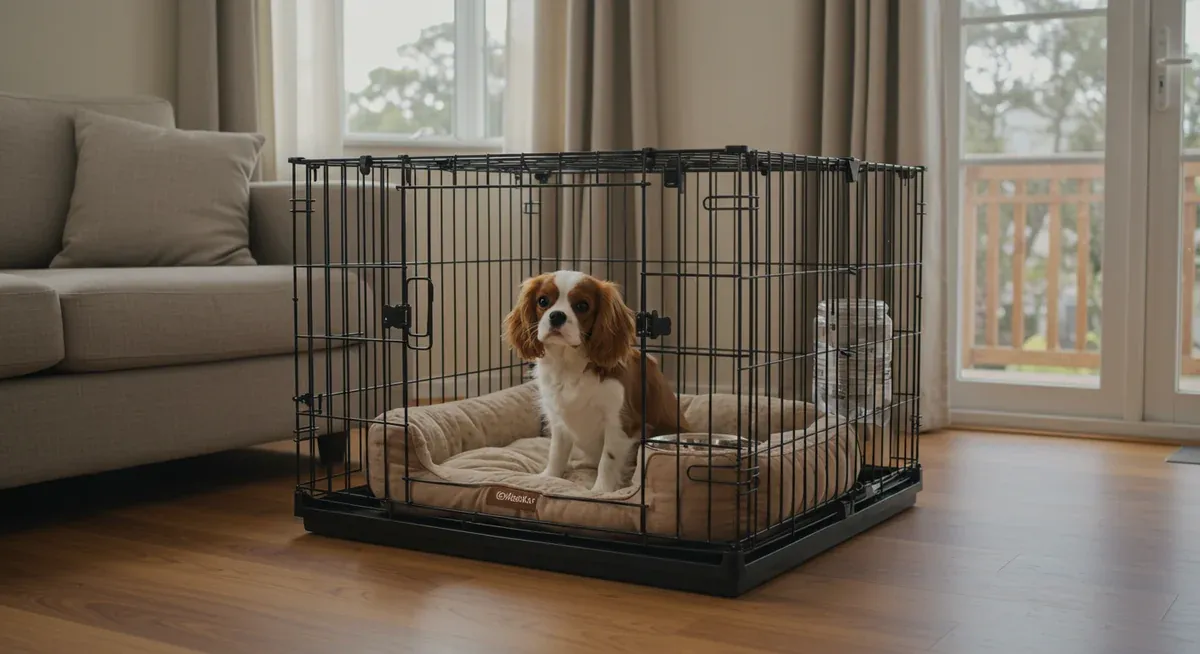
When you can't supervise directly, use crates or designated areas to limit access to the whole house. Crate training serves dual purposes here, providing both a safe space for your puppy and preventing accidents when you're not watching.
Choose a crate that fits your puppy comfortably, allowing them to stand up, turn around, and lie down. Popular brands like PetSafe and MidWest offer reliable options. The crate shouldn't be so large that your puppy can eliminate in one corner and sleep in another.
Building an effective routine
Create a schedule for feeding, playtime, and potty breaks to help your puppy learn when it's time to go outside. Take them out frequently, especially after meals, playtime, and naps. These are natural times when puppies need to eliminate.
Use a consistent command like "go potty" to help them associate the command with the action. Say this phrase every time you take them to their designated outdoor area, and use it consistently so they begin to understand what you're asking.
Timing matters more than you might expect. Young puppies often need to go outside every 1-2 hours during the day, with longer stretches possible at night as they develop better control.
Using positive reinforcement effectively
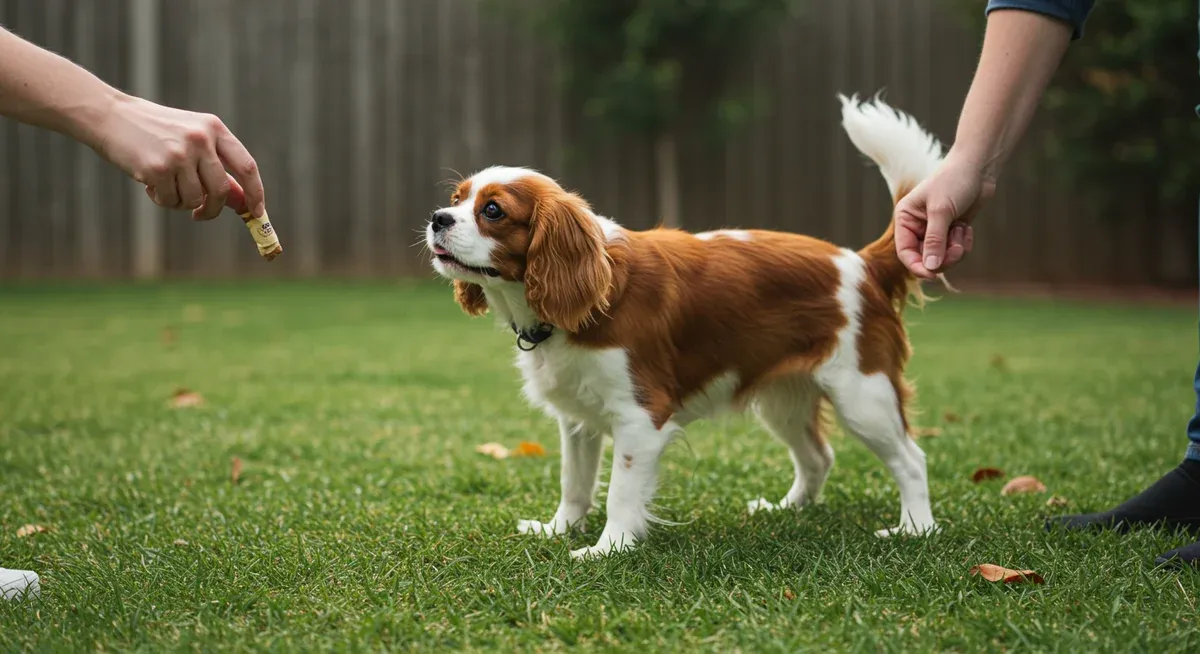
Praise and reward your puppy with treats and affection when they successfully go outside. The timing of this reward is crucial. Give praise and treats immediately after they finish eliminating in the correct spot, not when you come back inside.
Choose healthy treats that your puppy finds irresistible. Small, soft treats work best because they can eat them quickly without getting distracted from the lesson. Keep these special "potty treats" separate from regular training treats to make the reward more meaningful.
Many Cavalier King Charles Spaniels respond particularly well to verbal praise and gentle petting. Their people-pleasing nature means your enthusiastic "good dog!" can be just as motivating as food rewards.
Handling accidents properly
If your puppy has an accident, don't scold them. Instead, calmly take them outside to the designated potty area and reward them if they go. Scolding can create anxiety around elimination, which often makes house training take longer.
Clean up accidents with a pet-safe cleaner to remove any remaining scent that might attract your puppy to the same spot again. Regular household cleaners often don't eliminate the odours that dogs can detect, so invest in an enzymatic cleaner designed specifically for pet accidents.
Sometimes accidents happen because of separation anxiety, which can lead to elimination when your puppy is left alone. If this seems to be the case, gradually increase alone time to help your dog adjust to your absence.
Recognising when to seek help
While house training challenges are usually behavioural, health issues can impact a dog's ability to hold their bladder. Regular veterinary check-ups are crucial to rule out any underlying medical conditions that might affect training progress.
If you're experiencing persistent difficulties with house training after several months of consistent effort, consider consulting a professional dog trainer or behaviourist. They can provide personalised advice and strategies tailored to your specific situation.
Puppy kindergarten classes offer another valuable resource. These classes help your puppy socialise with other dogs and people, which can reduce anxiety and improve overall training responsiveness.
By following these guidelines and maintaining patience with your Cavalier King Charles Spaniel, you can achieve successful house training while strengthening the bond with your new companion. Remember that every puppy develops at their own pace, and consistency in your approach matters more than perfection in theirs.


