

Understanding your Chesapeake Bay Retriever's shedding patterns
You might notice your Chesapeake Bay Retriever leaving more hair around the house during certain times of year. This isn't your imagination. These dogs are moderate to heavy shedders with particularly intense periods in spring and autumn when they "blow" their undercoat to adjust to changing temperatures.
The shedding happens year-round, but twice annually you'll see a dramatic increase as your dog sheds their thick, wooly undercoat. This natural process helps them regulate body temperature, shedding the heavy winter coat in spring and preparing for colder weather in autumn.
What makes Chesapeake Bay Retrievers different from many breeds is their unique double coat structure. The outer layer consists of thick, oily, wavy hair that repels water, while underneath lies a soft, dense undercoat that provides insulation. This combination was essential for their original work as water retrievers in harsh conditions, but it also means more hair around your home.
The right tools make all the difference

Many Chesapeake Bay Retriever owners struggle with shedding because they're using the wrong tools. Metal rakes might seem logical for heavy shedding, but they can damage the coat's natural oil distribution that keeps your dog waterproof and warm.
Research shows that slicker brushes and undercoat rakes work most effectively for managing shedding in double-coated breeds. Rubber brushes or those with thin bristles help remove loose hair while preserving the essential oils in the coat. Popular brands like Furminator, Hertzko, and Wahl offer tools specifically designed for double-coated dogs, typically ranging from $15 to $50 depending on quality.
During regular shedding periods, brush your dog at least once weekly. When those intense spring and autumn seasons arrive, increase this to daily brushing or several times per week. You'll notice the difference immediately. Regular brushing removes dead hair before it falls naturally, reducing the amount floating around your home while stimulating healthy new growth.
Bathing without stripping natural protection
Have you wondered why your Chesapeake Bay Retriever's coat feels slightly oily? That's not dirt or poor grooming. Those natural oils provide crucial water resistance and insulation that define the breed's working ability.
Bathe your dog every three months or as needed, particularly if they swim frequently or get especially dirty. The key is using mild dog shampoos that clean without stripping away protective oils. Harsh shampoos can leave the coat dull and reduce its natural water-repelling properties.
High-quality, moisturising shampoos like Earthbath Oatmeal & Aloe or Wahl's mild formulas typically cost $10 to $25 per bottle and help maintain coat health. Proper bathing supports the skin underneath and can prevent issues that might increase shedding.
Nutrition's role in managing shedding
Sometimes the solution to excessive shedding lies in your dog's food bowl. Research tells us that diets rich in omega-3 and omega-6 fatty acids significantly support coat health and may reduce problematic shedding in Chesapeake Bay Retrievers.
Fish oil supplements or specialised dog supplements can make a noticeable difference within several weeks. These typically cost $15 to $40 monthly depending on dosage and brand quality. However, consult your veterinarian before adding supplements, as they can recommend appropriate dosages based on your dog's size and current diet.
Overall health affects shedding patterns too. Dogs experiencing stress, illness, or nutritional deficiencies often shed more than healthy dogs. Maintaining good nutrition and regular exercise helps minimise shedding related to these factors.
Seasonal shedding survival strategies
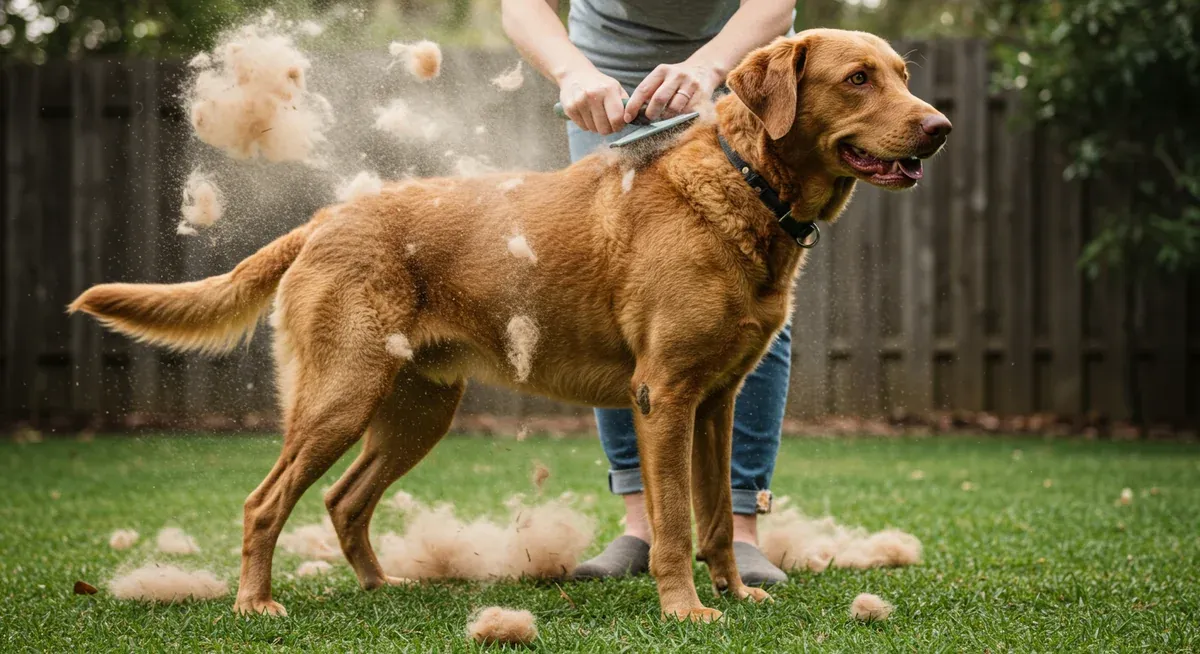
When spring and autumn arrive, you'll need an intensified approach. Daily brushing becomes essential during these periods when your dog sheds their undercoat most heavily. Many owners find it helpful to brush outdoors during peak shedding times to contain the loose hair.
Create a routine that works for both you and your dog. Short, frequent brushing sessions often work better than lengthy grooming marathons. Most Chesapeake Bay Retrievers tolerate grooming well when it becomes a regular, positive experience rather than an occasional ordeal.
Increase your household cleaning during these periods too. Regular vacuuming and using air purifiers can help manage the increased hair and potential allergens. Some owners find that brushing their dog right before bath time helps remove the maximum amount of loose hair at once.
When shedding signals health concerns
While heavy seasonal shedding is normal, sudden changes in shedding patterns warrant attention. Patchy hair loss, shedding accompanied by skin redness or itching, or a suddenly dull coat despite proper grooming may indicate underlying health issues.
Allergies, hormonal imbalances, skin infections, or nutritional deficiencies can all affect shedding patterns. If your dog develops bald patches, shows signs of skin irritation, or if their shedding dramatically increases outside normal seasonal patterns, consult your veterinarian.
Sometimes the reasons are medical, sometimes related to stress or environmental changes. Your vet can help determine whether the shedding represents normal breed behaviour or requires treatment.
Making shedding manageable long-term
Managing Chesapeake Bay Retriever shedding successfully comes down to consistency rather than perfection. Regular weekly brushing with appropriate tools, seasonal increases in grooming frequency, and attention to nutrition create a sustainable routine.
Remember that this breed's coat serves important functions beyond appearance. Those natural oils and the dense undercoat protect your dog in water and cold weather. Working with the coat's natural characteristics rather than against them produces better results for both shedding control and your dog's comfort.
Most owners find that after establishing a regular routine, shedding becomes much more manageable. The initial investment in quality tools and learning proper techniques pays off in reduced household hair and a healthier, more comfortable dog.


